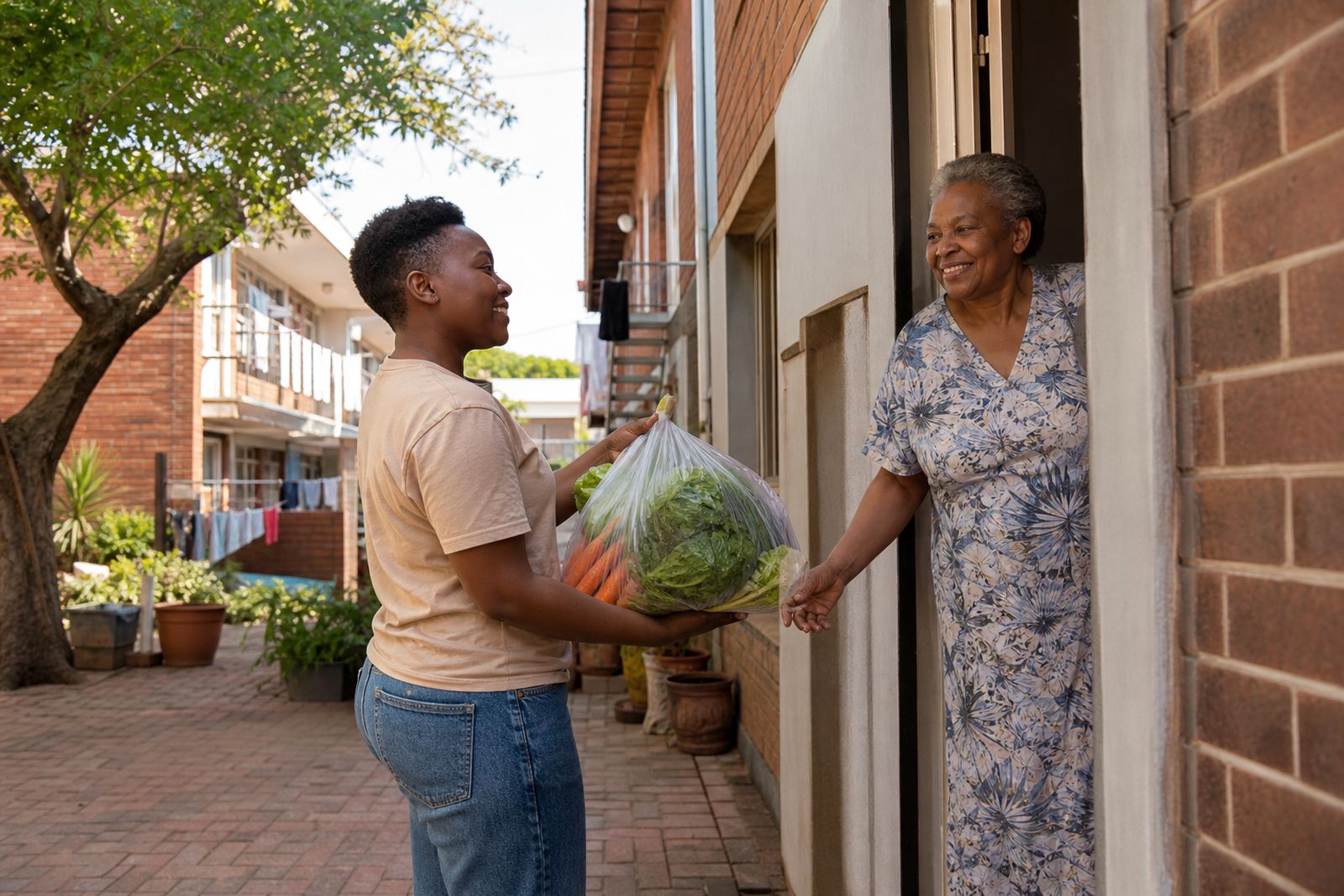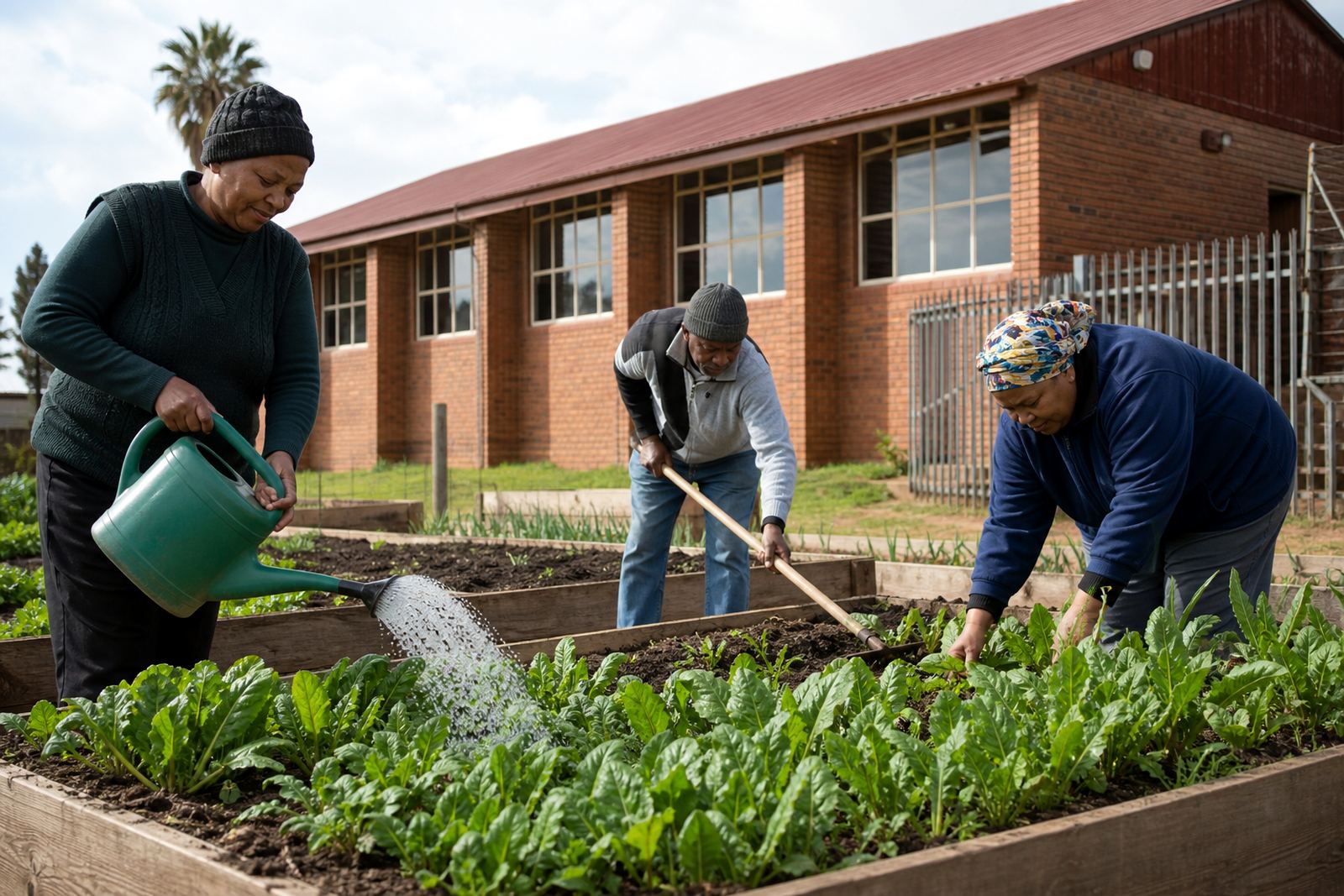
A working garden for food, teaching and shared upkeep
Community Garden is set up for places that need more than decorative planting. It gives you defined growing bays, space for seasonal vegetables, herb beds and a neat layout that people can maintain without crowding one another. In Braamfontein and across Johannesburg, that usually means a compact footprint with clear paths, while larger sites in Cape Town, Durban or Polokwane can run wider beds and a central working area.
The structure can be planned as a starter plot or a larger community food space. Timber edging, brick kerbs or steel-framed planters can be used depending on ground conditions and the look you want. If the site has hard use, drainage and edging matter as much as the planting mix, especially where people move in and out with buckets, wheelbarrows and tools.
Typical features include raised beds, soil fill, compost space, a watering point and room for labels or simple education boards. Where children or older volunteers will work the beds, the height of the planters should be kept practical. A 450 mm to 600 mm bed height works well for most vegetable growing, while 300 mm edges are suited to low herbs and ground covers.
Sizes and layout choices that suit real sites
The smallest option is a compact 2 m by 3 m starter layout, often used for a courtyard, school corner or clinic yard. Medium gardens usually sit around 3 m by 6 m, with two or four beds and a narrow path between them. Larger community plots can be built from modular sections, so the size can shift to suit the available ground and the number of people tending it.
- Starter layout: 2 m by 3 m, for a few beds and light foot traffic
- Medium layout: 3 m by 6 m, for mixed vegetables, herbs and compost storage
- Expanded layout: modular sections that can be added as the project grows
- Bed depth: 300 mm, 450 mm or 600 mm depending on crop type
- Path width: usually 600 mm to 900 mm for wheelbarrow access and cleaning
Soil choice changes with the crop mix. Leafy greens need a lighter mix with good moisture hold, while tomatoes, peppers and root crops need deeper soil and steady drainage. In coastal areas, stronger winds and salt in the air can mean sturdier edging and more frequent mulch checks. Inland sites often need better moisture retention and sun planning, especially where the garden sits in full afternoon heat.
Where the garden fits best on a site
This kind of garden works well where people already gather, learn or receive care. Schools use it for garden lessons and food growing. Clinics and care centres use it for calm, visible spaces that also support herbs or vegetables. Faith groups, youth projects and informal settlements often prefer a garden that can be fenced and split into smaller beds so different teams can take ownership.
It also suits spaces where the ground is uneven or where the municipality expects clear boundaries around planted areas. A neat layout helps with keeping footpaths open, directing watering, and avoiding soil wash in heavy rain. If the site has public access, low fencing or a trellis edge is worth including so beds do not get stepped on or used as shortcuts.
- Schools and early learning spaces
- Clinics, counselling centres and care homes
- Church yards and faith-based feeding projects
- Urban backyards, rooftops and shared courtyards
- Community halls, youth centres and public open plots
Fitting and setup that keep the plot usable
Installation starts with ground marking, levelling and checking where water collects after rain. Once that is sorted, the beds can be framed, filled and planted in rows that make weeding and harvesting easier. If the site uses timber, it should be treated for outdoor use and fixed above damp ground where possible. Steel edging suits tougher sites, though it needs neat anchoring and careful handling during installation.
Water access is part of the plan. Some gardens work with a hose point nearby, while others need a tank-fed watering routine or a simple drip line. If the site is spread out, hose lengths and tap points should be measured before anything is fixed down. A small compost corner and a lockable tool store also help, especially where the garden is shared by several groups.
For growing food, the fitting needs to include enough depth for roots and enough space for access. The beds should not be packed too tightly, and the corners should be strong enough for people leaning on them while planting or harvesting. Where the ground is soft, a compacted base or paving strip around the beds helps keep the layout tidy.
Care routines that keep the beds productive
Community Garden care is usually hands-on and seasonal. Mulch needs topping up, weeds should be pulled before they seed, and soil should be turned lightly rather than dug too hard. In warm months, watering should happen early or late in the day so the beds do not dry out too fast. Where the project is in a windy part of the Western Cape or a hot inland pocket, mulch becomes even more important.
Planting should rotate so the soil does not get tired. Leaf crops can follow legumes, and heavier feeders should not sit in the same bed for too long. If the beds are used by many people, a short care rota helps keep the plot in order. That rota can cover watering, harvesting, cleaning tools and checking for pests such as aphids or caterpillars.
- Top up mulch every few weeks in dry weather
- Check bed edges after heavy rain or strong use
- Remove weeds before they spread into paths
- Wash tools and store them out of the weather
- Rotate crops between leafy, fruiting and root beds
Ordering details worth confirming before the layout is fixed
When ordering, confirm the site size, the number of beds, whether the ground is level, and which crops the group wants to grow first. It helps to note whether the garden is for food production, learning, healing work or shared beautification, because each one needs a slightly different layout. If the garden must fit a boundary wall, a paving edge or an existing tree, that should be measured before the final plan is set.
You should also confirm the preferred bed material, the height of the planters, the access path width, water source, soil depth and whether fencing is needed. If children, elderly users or people with limited mobility will work in the space, that affects the height and spacing. For sites in Johannesburg, Durban, Gqeberha or Polokwane, local rainfall and sun exposure will also influence the soil mix and the type of cover used on the beds.
Our contact form is where the site notes, rough measurements and any photos showing the ground conditions should be sent. That helps the layout match the space instead of forcing the space to fit a fixed shape.
Key facts
| Product type | Community garden layout for shared growing spaces |
|---|---|
| Standard footprints | 2 m x 3 m, 3 m x 6 m, modular larger layouts |
| Bed height options | 300 mm, 450 mm or 600 mm |
| Common materials | Treated timber, steel edging, brick kerbs, planter walls |
| Typical uses | Vegetable beds, herb rows, learning plots, shared feeding gardens |
| Setup needs | Level ground, water access, drainage plan, edging and soil fill |