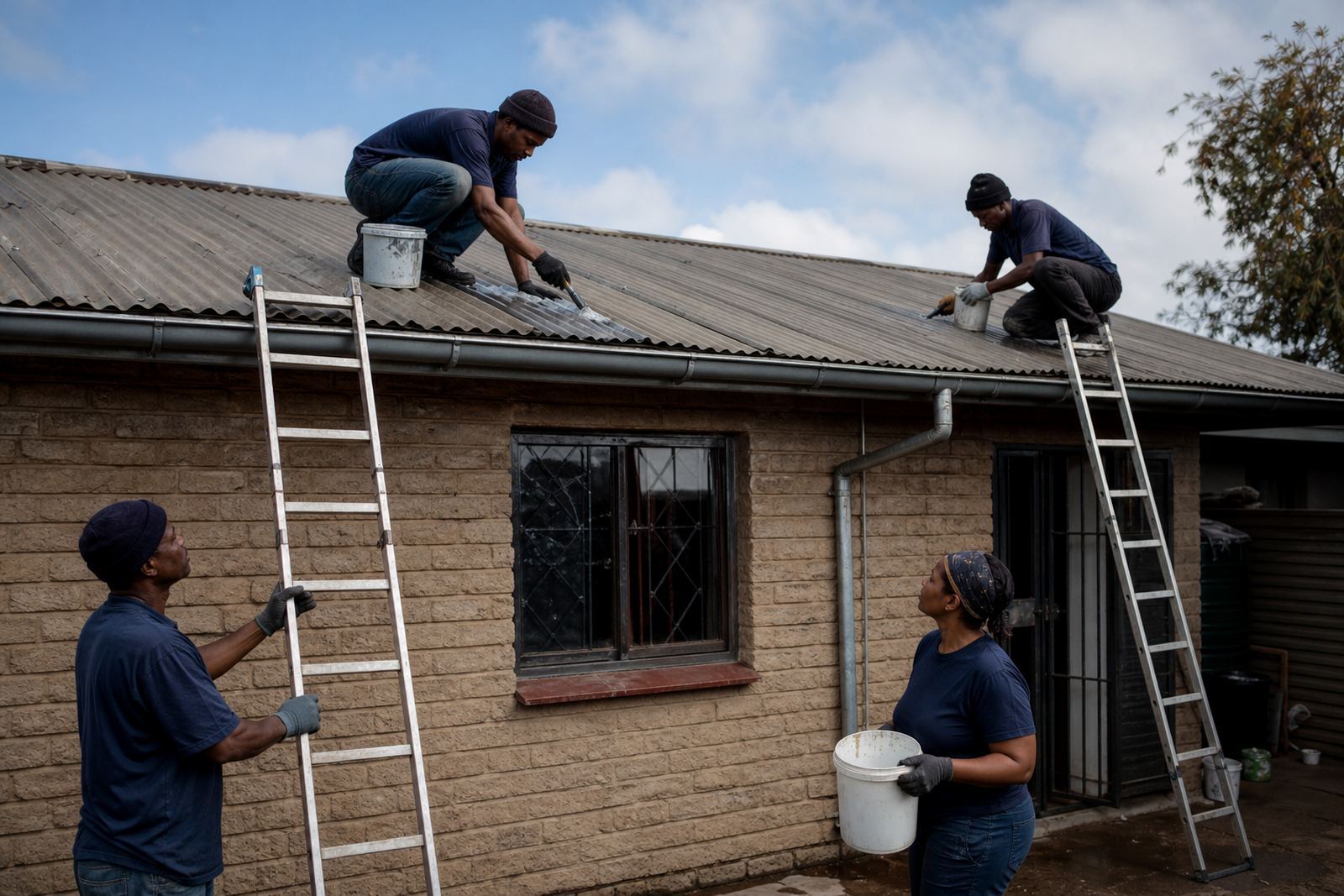
A practical support package for lived-in homes
Housing Help covers hands-on work that improves daily living without turning the place into a building site. It may include minor repairs, safer fittings, room resets, cleaning support, storage fixes and basic access improvements, depending on the home and the brief. The aim is to help a property function better for the people inside it, especially where stairs, damp corners, cluttered passages or awkward layouts are making life harder than it should be.
It works well for flats, township homes, backyard units, free-standing houses and shared family homes in Johannesburg, Cape Town, Durban, Gqeberha and Polokwane. The service is often booked where a room needs to be made easier to use for an older person, a child, a carer or someone recovering from illness. Some jobs are small and focused, while others need a few linked tasks done in sequence.
Sizes and options that suit different homes
Housing Help is usually planned in three broad sizes so the work matches the space and the budget. A small option suits one room, one passage or one problem area, such as a damp cupboard, loose fittings or a risky step. A medium option covers several connected tasks in one part of the home, for example a bedroom, bathroom and nearby circulation area. A larger option is used where the home needs a fuller reset across multiple rooms and shared areas.
- Small: one room, one fix list, or one access issue
- Medium: up to three related areas with mixed tasks
- Large: multiple rooms, storage changes, cleaning and minor repairs
- Custom: for homes with mobility needs, children in the house, or shared occupancy
Options are shaped around the property type and the level of work already done. A compact flat in Braamfontein needs a different plan to a family house in Soweto or a townhouse in Bloemfontein, so measurements and access details matter before anything is set out.
Where the work fits best
This kind of help suits homes where everyday movement is being slowed down by small but stubborn issues. Think slippery bathroom floors, dark corridors, overflowing cupboards, broken handles, loose rails, chipped thresholds or a kitchen that needs a safer working flow. It also suits homes where cleanliness is hard to maintain because storage is too tight or the furniture layout blocks proper sweeping and mopping.
For a child-headed household, an elderly resident, a person with reduced mobility or a family hostng several relatives, the right changes can make a real difference to daily use. In humid coastal areas like Durban, mould-prone corners and closed-up cupboards often need special attention. Inland, dust and hard floors create other wear patterns, so the final plan should suit the local conditions and the way the home is lived in.
- Best for occupied homes that need a cleaner working layout
- Useful where minor safety issues are building up over time
- Suitable for private homes, rental units and shared family spaces
- Helpful when a room must serve more than one purpose
Fitting, setup and site access
Some Housing Help tasks need light fitting work, while others are mostly labour, cleaning or rearrangement. If rails, shelves, organisers, seals, hooks or simple hardware are being added, the walls and surfaces need to be checked before work starts. Brick, concrete, plasterboard and old painted surfaces do not behave the same way, so anchors and fixings must match the substrate. In older Johannesburg homes, this often means checking for brittle plaster or uneven walls before drilling.
- Measure room widths, door openings and wall lengths
- Note wall type, floor finish and any uneven surfaces
- State whether the home is upper floor, ground floor or a yard unit
- Confirm if lifts, stairs or narrow access points are involved
Care, cleaning and everyday upkeep
Once the work is complete, the home needs ordinary care to keep it useful. Wipe fitted items with a damp cloth and mild cleaner, dry wet areas properly, and keep heavy items off weak shelves. In bathrooms and kitchens, check seals, corners and edges for moisture build-up. If the property is close to the coast, salty air can accelerate corrosion on exposed fittings, so metal parts should be inspected now and then.
Floor care matters too. Smooth floors need regular cleaning to avoid slips, while textured finishes may hold dust and grit in corners. Storage zones should be kept light enough to open and close properly, with clear paths for sweeping and moving around. Small habits like these help the space stay usable after the initial work has been done.
Details to confirm first
Before Housing Help is arranged, the brief should set out what the home looks like now and what the space must do afterwards. A good brief covers the rooms involved, the problem areas, the measurements, and whether the household needs safer movement, better cleaning flow or more storage. It should also state if the property is rented, owned or shared, because permission for fittings may matter.
The following details help the job land properly:
- Property type and town or suburb
- Rooms or areas that need attention
- Approximate measurements and access points
- Any mobility, child safety or care concerns
- Preferred materials, colours or finishes where relevant
- Whether the work includes fitting, repair, cleaning or repositioning
For enquiries, use our contact form on our contact page and add the room details, the state of the space, and any consent or privacy concerns if the work involves a nominee or household member. Clear notes help the team assess the right approach for the home in question.
Key facts
| Service type | Hands-on housing support for safer, cleaner and more liveable homes |
|---|---|
| Typical scope | Minor repairs, cleaning support, storage changes, safer fittings and access improvements |
| Size options | Small, medium, large and custom |
| Suitable properties | Flats, family houses, backyard units, rentals and shared homes |
| Common materials | Rails, hooks, shelves, organisers, seals, fixings and light hardware |
| Coverage areas | Johannesburg, Cape Town, Durban, Gqeberha, Polokwane and other South African towns and cities |