What the Water Access nomination covers
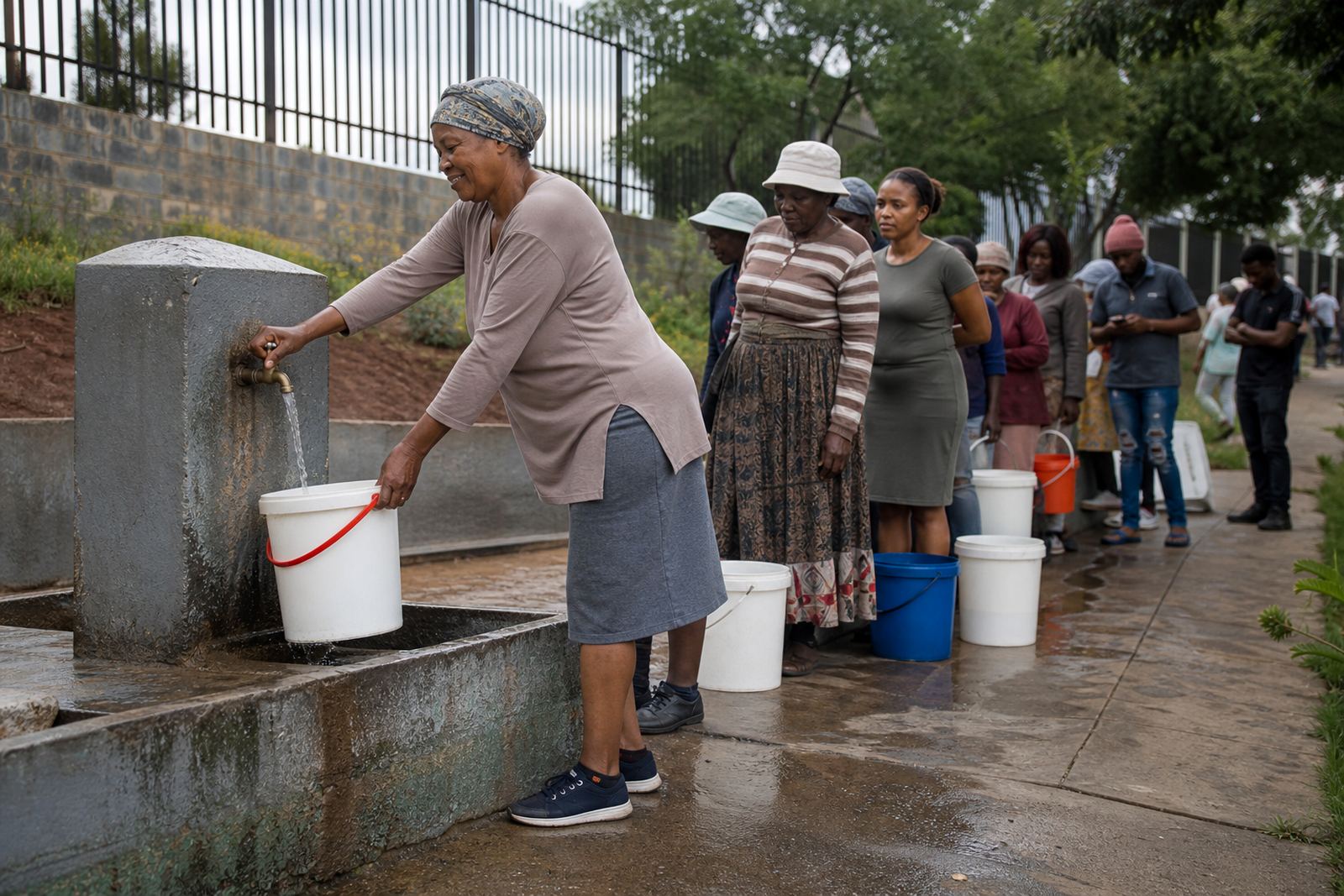
Water Access is for people who step in when water is short, uncertain or unevenly shared. That can include a neighbour who arranges a bucket rota, a volunteer who helps elderly residents collect water, a teacher who keeps learners supplied at school, or a community member who explains where safe collection points are and how to use them fairly.
A good nomination describes the help in plain language. State who acted, what they did, where it happened and why the action mattered. If the person organised access rather than physically carrying water, explain the result. If they did carry, describe the volume, distance, containers used and the conditions on the ground, because those details help the review team understand the real effort involved.
- Best for community help around taps, tanks, storage and collection points.
- Works for one-off action or steady support over a period of time.
- Useful where fairness, safety and dignity matter as much as effort.
How to put together a strong nomination
Keep the story specific. A short account of a real incident is stronger than broad praise. Mention dates or a rough time frame, the suburb or town, and the practical problem that was faced. If the nominee reduced queue pressure, helped with transport, or arranged turns for different households, say so directly.
Evidence helps when it is clear and relevant. A photo of the water point, a note from a school, a message from a resident association, or a short statement from someone who saw the work can all support the nomination. Written detail matters too, especially where there is no formal record. Use names only where people have agreed to be identified.
- Describe the actual help, not only the outcome.
- Add dates, places and names where consent allows it.
- Include evidence that matches the story, not unrelated documents.
Eligibility, consent and privacy in plain terms
Only nominate people who have agreed to be nominated, unless the nomination rules for a particular round say otherwise. Consent matters because the nomination may include personal details, local conditions, photographs or comments from neighbours. If the nominee is a minor or someone who needs support making that decision, explain who gave permission and in what form.
Privacy is handled with care. Sensitive details should be shared only when they help explain the contribution, and only when the nominator has a lawful basis to include them. Health details, home addresses, identity numbers and other private records should stay out unless they are truly needed and the person concerned has agreed. A strong nomination tells the story without exposing more than is necessary.
- Get clear permission before naming or describing a person.
- Leave out private records unless they are essential.
- Use the minimum detail needed to explain the contribution.
Judging criteria for water-related community help
Judging looks at the value of the action, the care shown to other people and the practical effect on the community. A nomination is stronger where the help was direct, useful and grounded in local need. The review process also considers fairness, whether the action was repeated or sustained, and whether the story is supported by honest evidence.
Judging is not only about size. A single well-judged intervention in a quiet street can matter as much as a wider effort, if it protected dignity, reduced conflict or made access safer. Clarity helps here. Explain what changed after the person stepped in and what would have been harder without that help.
- Focus on practical value and community impact.
- Show fairness, care and good judgement.
- Support the claim with evidence that fits the story.
Fitting it to the place where water is needed
This nomination type suits homes, schools, churches, clinics, farms, informal settlements and shared residential spaces where water access needs organised care. It also works where the issue is not shortage alone, but pressure on a tap, confusion around turn-taking, or unsafe handling of containers and storage. In Braamfontein, Soweto, Cape Town, Durban, Gqeberha and Polokwane, the details will differ, so the nomination should match the local setting.
When you write the story, include the shape of the place. A block of flats, a yard with one shared tap, a rural standpipe or a school collection point all bring different risks and different forms of help. The review team needs that context to judge the work fairly.
- Useful for shared taps, tank points and collection spots.
- Fits urban, peri-urban and rural settings.
- Explain the local layout so the help makes sense.
What to confirm before you send the nomination
Before submitting, check the spelling of names, the town or suburb, and the nominated person’s consent. Make sure the story stays focused on water access and does not wander into unrelated praise. If you include pictures, check that they are clear and that anyone visible has agreed to appear. For our contact form, use it when you need help with a nomination, an update, or a privacy question tied to a submission.
You should also confirm any detail that could cause confusion later, such as whether the help was one person’s action or a team effort, and whether the nominee should be identified by full name or not. If the person has worked across more than one area, mention the main place linked to the help so the record stays tidy.
- Check consent, names and location details.
- Keep the nomination tied to one clear water story.
- Make sure any images or statements match the text.
Key facts
| Category | Community recognition nomination for water access help |
|---|---|
| Format | Public nomination with review against set criteria |
| Coverage | Johannesburg, Cape Town, Durban, Gqeberha, Polokwane and other South African areas |
| Information needed | Nominee name, location, story, supporting evidence and consent |
| Privacy handling | Sensitive details limited to what is necessary and agreed |
| Submission route | our contact form on our contact page |