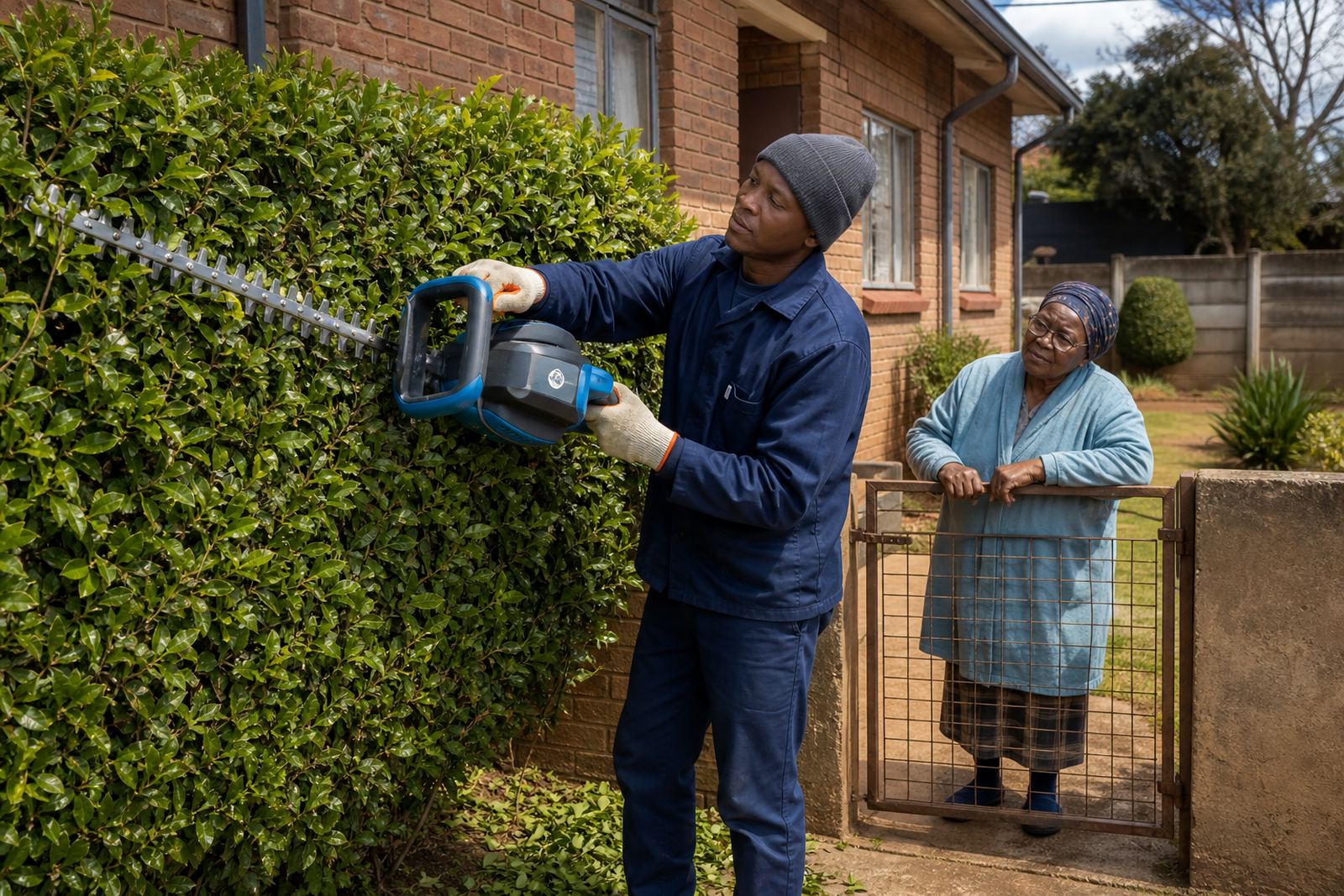
A neighbourhood point that keeps small help in one place
Suburban Helper is built for ordinary support tasks that often get lost in chats, voice notes and loose paper. It gives a suburb a fixed point for notices, sign-ups, volunteer requests, care updates and other small actions that help people stay connected.
The unit is made for regular use in shared spaces and it is tidy enough for an entrance wall, a guardhouse side wall, a common passage or a community room. The front panel can carry simple labelling, while the internal section keeps papers, forms or small packets grouped instead of scattered. On busy streets in Johannesburg, Cape Town or Durban, that kind of order matters more than people think.
- Wall-mounted or freestanding formats
- Choice of powder-coated steel or treated timber finish
- Lockable front access for controlled use
- Optional clear cover for notices and forms
Sizes and options that suit different shared spaces
The standard size works well where floor space is tight, while the larger unit suits estates, apartment lobbies and community centres that handle a steady flow of notices. A slim version fits narrow passages and reception walls, and a wider format gives more room for grouped messages, rota sheets and community updates.
Customers usually confirm the footprint, mounting height and how many compartments are needed. A compact single-panel unit is easier to place in small suburban buildings, but shared spaces often benefit from a double-section layout with separate areas for general notices and private hand-ins. That keeps the use neat and avoids mix-ups.
- Compact, standard and large footprints available
- Single, double or multi-compartment layouts
- Front-loading or side-access configuration
- Custom colour for visible or low-key placement
Where it works best in real suburban settings
Suburban Helper suits places where people help one another without formal fuss. It works in homeowner common areas, clinic foyers, school notice zones, church halls, block entrances and neighbourhood offices where care tasks need a visible handover point.
In coastal towns, a sealed finish is useful because damp air can mark untreated surfaces, so a coated steel shell or properly sealed timber option is the safer fit. Inland, the same unit handles dust and heavy use, provided it is wiped down and checked now and then. It is equally useful where volunteers collect food parcels, carers leave reminders, or residents need a shared place for community notices and sign-up sheets.
- Estate entrances and shared foyer walls
- School, church and clinic community zones
- Neighbourhood offices and resident association spaces
- Low-traffic passages with wall clearance
Fitting notes and the sort of setup it needs
Most installations are straightforward, but the fixing points must match the wall type. A solid brick wall takes different anchors from plasterboard or timber framing, and the fitter needs to check level, height and reach before mounting. If the unit is freestanding, the base should be fixed to a stable floor so it does not shift when people open the front.
Some spaces want a lockable compartment with a clear viewing window, while others need closed storage for privacy. If the unit carries a notice panel, the installer should leave enough room for opening the door without hitting a nearby handrail or doorway. For outdoor use, a small overhang or sheltered position helps reduce weather wear.
- Anchor choice depends on wall material
- Clear opening space in front of the unit
- Level mounting for door alignment
- Sheltered placement preferred for outdoor edges
Care, cleaning and day to day upkeep
Care is simple if the unit is used properly. Clean the outside with a soft cloth and mild cleaner, then dry it so moisture does not remain on the finish. For powder-coated surfaces, avoid harsh scourers that scratch the coating, and on timber finishes use a cleaner suited to sealed wood.
Locks, hinges and magnets should be checked from time to time, especially where the unit is opened often. If the clear cover is fitted, it should be cleaned gently so the notices stay legible. In busy suburban areas, a quick weekly check is usually enough to catch loose screws, peeling labels or weather marks before they build up.
- Soft cloth and mild cleaner only
- Check hinges, locks and fixings regularly
- Keep printed inserts dry and flat
- Touch up labels before they curl or fade
Details to confirm before ordering the unit
When ordering Suburban Helper, it helps to confirm the exact size, finish, mounting method and whether the unit needs one or more compartments. The team should also know whether the installation site is indoors or outdoors, which side the door must open, and whether the surface is brick, concrete, timber or another base.
For community use, it is also worth confirming if the unit will hold printed forms, notice sheets, envelopes or small parcels. That affects the internal depth and the access opening. If the unit is meant for a public or semi-public area, the privacy setup should be clear from the start so sensitive items are handled neatly and without confusion.
- Overall height, width and depth
- Wall-mounted, freestanding or recessed fitting
- Indoor or outdoor location
- Lock type and compartment layout
- Finish colour and label format
- Use case: notices, forms, hand-ins or mixed use
Key facts
| Product type | Community support unit for notices, hand-ins and small shared items |
|---|---|
| Standard size | 900 mm high x 600 mm wide x 250 mm deep |
| Large size | 1200 mm high x 900 mm wide x 300 mm deep |
| Material options | Powder-coated steel, sealed timber or mixed finish |
| Mounting | Wall-mounted or freestanding base |
| Finish | Indoor or outdoor rated, with optional clear viewing panel |