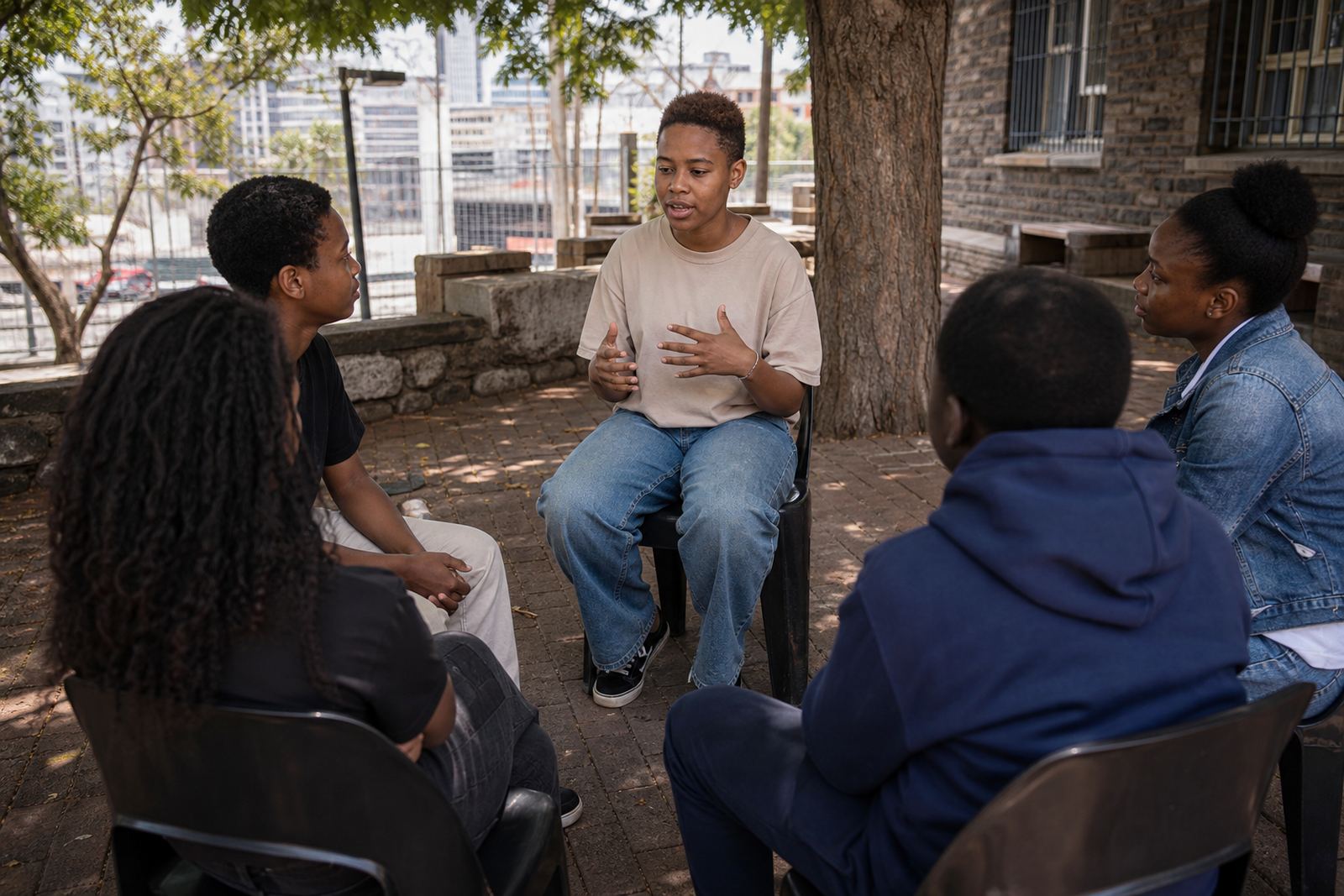
What the Youth Leader category covers
Youth Leader is for a young person whose actions shift things around them in a visible way. That can mean helping younger learners settle into school, organising food drives, standing up a clean-up campaign, mentoring peers, or holding a local safety effort together when adults are not always present. The programme looks for steady contribution, not a one-off photo moment.
The nomination should name the person, explain what they did, and describe who benefitted. It helps to set out the age range, the place where the work happens, and whether the nominee acts alone or with a small team. The clearer the story, the easier it is to see the difference they make in daily life.
- Open to nominations from anywhere in South Africa, including Johannesburg, Cape Town, Durban, Gqeberha and Polokwane.
- Best suited to learners, student leaders, youth volunteers and young organisers.
- Works well for community actions, peer support, school support and neighbourhood service.
How to put a nomination together without leaving gaps
Start with the basics and keep the wording direct. Give the nominee’s full name, town or suburb, approximate age or age band, and the reason they stand out. Then add one or two short examples that show what they did in practice, who was involved, and what changed because of their effort. A nomination that says more than praise, and less than a long speech usually carries more weight.
Useful evidence can include a short written account from a teacher, community leader, parent, coach, youth worker, or someone who saw the work first-hand. Photos, notices, flyers, attendance lists, meeting notes or messages can also help when they are relevant and ethical to share. The programme does not need a polished story if the facts are sound and the examples are real.
- Use dates or time periods where possible, even if they are approximate.
- Explain whether the work happened at school, in a church group, on a sports field, at home, or in the wider community.
- Show the nominee’s own role instead of describing only the group outcome.
Eligibility and the kind of youth this category fits
This category is for young people who are already carrying responsibility in ways that matter to others. The age band should fit the programme rules for that cycle, and the person should be active in the community work being described. A nomination is stronger when the person is clearly the right fit for Youth Leader rather than a general service story.
The judging process looks at whether the nominee’s actions are consistent, useful and grounded in real need. It also checks whether the effort is appropriate for the nominee’s age and setting. A young person running a peer support group, organising food hampers, teaching younger children, or helping coordinate local safety awareness may fit well if the story is specific and the work is genuine.
- Suitable for school, youth club, faith group, sports, and neighbourhood leadership.
- Can include voluntary work, peer mentoring, advocacy, or organised support in the area.
- The nominee should be reachable through normal contact details if more information is needed later.
Consent, privacy and sensitive details
Consent matters before a nomination is submitted. If the nominee is old enough to understand the entry, they should know they are being nominated and what details are being shared. If the nominee is under age, the relevant parent, guardian, school or responsible adult should be part of the process where appropriate. The goal is to keep the person comfortable with the nomination and clear about how their information is used.
Not every detail needs to be public. Home addresses, medical details, family matters and other sensitive information should only be included when they are truly relevant and when there is a good reason to share them. The privacy team checks how information is handled and keeps the nomination focused on the award purpose, not on unnecessary personal exposure.
- Write only the information needed to support the nomination.
- Leave out sensitive personal history unless it is essential.
- Make sure consent is understood before the entry is sent.
Judging points that matter in plain terms
The judging process looks for substance rather than style. The panel wants to see what problem the young person noticed, what they did about it, how often they showed up, and who benefited. A strong nomination has a clear thread from need to action to outcome. It should be easy to follow, even if the nominee is quiet, modest, or works in the background.
Entries are easier to assess when they include the local setting and the nominee’s role in it. A youth who organises weekly reading support in a township library, or a learner who coordinates peer anti-bullying efforts at school, gives the panel something concrete to evaluate. Short, factual detail tends to work better than broad praise.
- Impact in the community or among peers.
- Consistency of effort over time.
- Clear role, not just general support.
- Fit between the nominee’s age and the scale of the work.
What to confirm before you send the form
Before using our contact form, check the spelling of the nominee’s name, the town or area, and the contact details for the person submitting the nomination. Confirm that the story matches the category, that any attached evidence is readable, and that consent has been covered. If the entry mentions schools, youth groups or community spaces, use the correct names and keep them consistent across the form.
It also helps to decide whether the nomination is for a single person or a young person acting with a small team. If the effort involved several people, explain exactly who did what so the Youth Leader focus stays clear. The programme team in Braamfontein, Johannesburg, receives nominations from Gauteng, Western Cape, KwaZulu-Natal, Eastern Cape, Limpopo, Free State, North West and Mpumalanga, so place details matter.
- Full nominee name and the area where they live or work.
- Short summary of the leadership shown.
- Consent status and any privacy notes.
- Evidence attached or referenced.
After submission, what the record should still hold
A good nomination remains useful after it is sent because it tells a complete story on its own. The record should show the nominee, the reason for the entry, the evidence supplied, and any privacy note that affects handling. If a detail changes later, such as a contact number or school name, the nomination can be updated through the normal process so the file stays accurate.
Public questions should stay focused on the category and the submission requirements. The programme does not need dramatic language. It needs a fair account of a young person doing useful work, with the right consent, the right privacy handling, and enough detail for a careful review.
- Keep a copy of the wording used in the entry.
- Note any follow-up information that may matter to the review team.
- Use the same facts across the form, evidence and consent note.
Key facts
| Category | Youth Leader |
|---|---|
| Programme type | Nomination-based awards entry |
| Coverage | Public nominations from across South Africa |
| Base | Braamfontein, Johannesburg |
| Nomination methods | Our contact form and supporting nomination details |
| Core checks | Eligibility, story detail, consent, privacy, evidence, judging criteria |