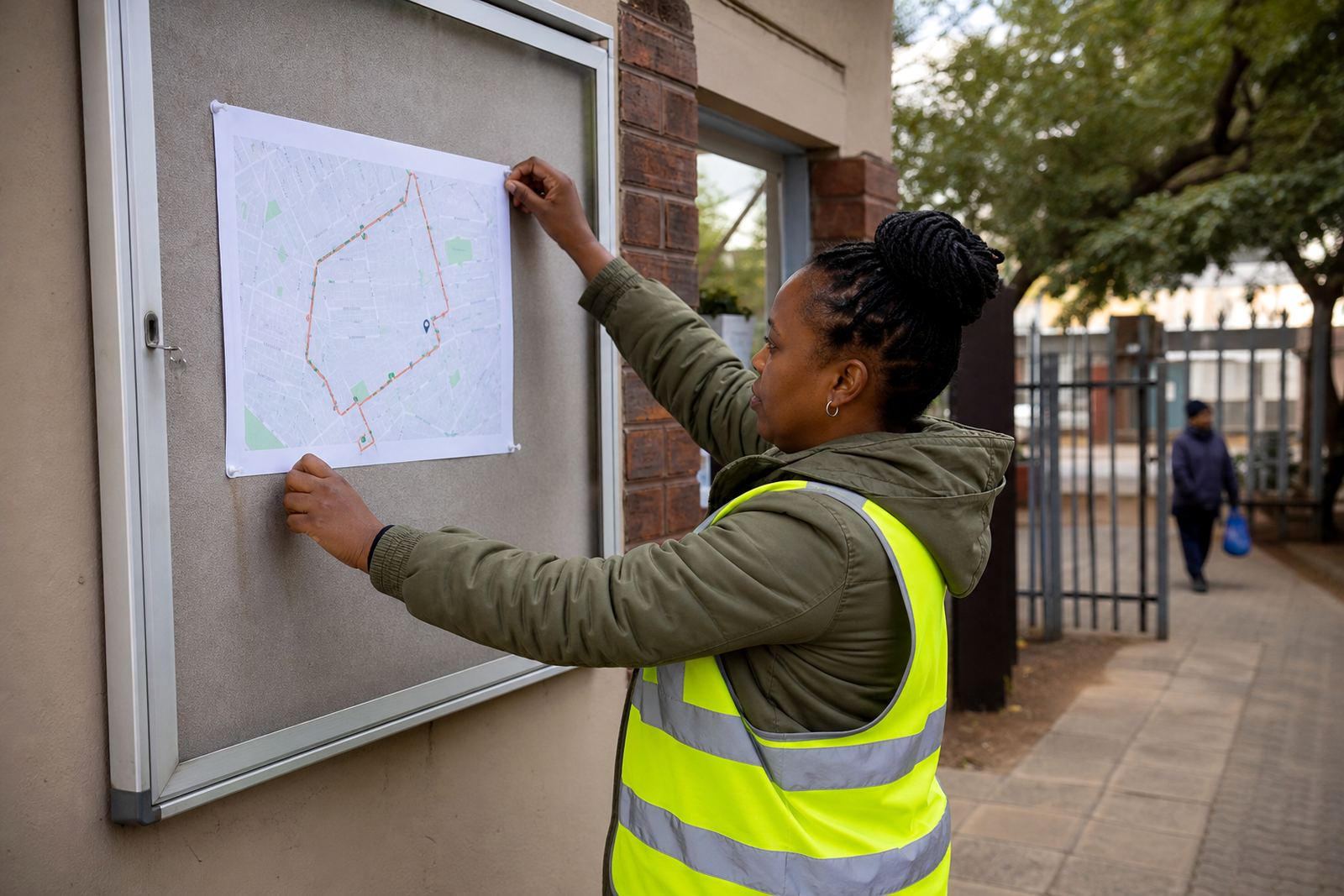
When a resident organiser becomes worth nominating
Community organisers are usually the people who notice problems early and get neighbours moving. They may run clean-up drives, help households after a fire, organise food parcels, coordinate transport for older residents, or keep a school support group going when money is short. A strong nomination shows that kind of steady effort clearly, with enough detail for the story to stand on its own.
For this use-case, the nomination should not read like a praise note pasted from memory. It helps to describe the local problem, what the nominee did, who benefited, and what changed in practical terms. If the work spans a ward, a block of flats, a township section or a suburban street, say so. The more grounded the account, the easier it is to assess fairly.
- State the community area, such as a suburb, ward or town.
- Explain the practical issue the nominee helped with.
- List the actions taken over time, not one off gestures.
- Include names only where people have consented to be mentioned.
What to send with a nomination for community work
A good submission usually includes a short story, a few supporting notes and usable evidence. That evidence can be photographs, posters, meeting notices, messages from local groups, attendance records or written confirmations from people who know the work first-hand. If the nominee helped during a flood, township closure, school crisis or local safety drive, record the sequence in plain language.
Do not overload the form with vague claims. A page full of general praise is less useful than a tighter account with dates, places and a real example of the organiser’s role. If there is a committee, stokvel group, faith group or street forum behind the effort, explain who did what so the nomination reflects the work honestly.
- Use clear photos with context, not random images.
- Attach evidence that shows repeated involvement.
- Keep the story focused on community benefit.
- Leave out anything that cannot be checked or explained.
Consent and privacy for nominees who help neighbours
Because many organisers work in sensitive settings, consent matters. If the nominee is named in a submission, the person should know they are being put forward and understand how their details may be used. That includes their name, location, role and any story elements that could identify them. Where a nomination includes children, vulnerable households, medical detail or personal hardship, the information should be limited to what is needed for judging.
Privacy should be treated as part of the nomination itself, not an afterthought. Avoid sharing personal contact details, identity numbers or private family matters unless the process specifically asks for them and the nominee has agreed. If the organiser works in a small town or a tight-knit street, careful wording matters even more because many people will know the story already.
Our contact form can be used for public questions about consent, privacy and updates to a nomination.
Judging a community organiser on the work, not the noise
Judging should stay practical. Reviewers usually look at the scale of the need, the usefulness of the action, the consistency of involvement and the effect on the people served. A nominee does not need a fancy title or a formal organisation behind them. What matters is whether the work is real, repeated and clearly tied to community benefit.
When a nomination is reviewed, these points carry more weight than broad praise:
- Evidence that the nominee stepped in where help was needed.
- Signs of steady involvement over time.
- Details that show the work reached actual residents.
- Any support from others who saw the contribution first-hand.
- Whether the nomination is clear, specific and consistent.
If several people helped, the submission should say how the nominee contributed rather than claiming credit for the whole effort. That makes the file stronger and easier to compare with other entries from Johannesburg, Cape Town, Durban, Gqeberha, Polokwane and smaller places in between.
Layout notes for nominations coming from local groups
Many organisers draft nominations from a church hall, a community office, a school room or a local meeting spot, so the paperwork should be kept simple. One person can gather the story, another can verify names, and a third can check that consent is in place before the form is sent. If a group handles nominations across a province, keep one master file for the story and separate notes for each nominee.
People often make the same mistakes: too little detail, too many names without consent, or evidence that does not match the story. Another common issue is mixing up the organiser’s role with the group’s work. The nomination should show the nominee’s contribution cleanly, even where a team was involved.
A useful submission pack usually includes a short written account, one or two supporting files, a consent note and any extra context needed for review. If the organiser works with residents across Gauteng, Western Cape, KwaZulu-Natal, Eastern Cape, Limpopo, Free State, North West or Mpumalanga, keep the location details neat and consistent across every page.
Budget ranges in Rand for a serious nomination
Most nominations do not need a large spend, but there are still practical costs if a group wants the entry to be tidy and complete. Printing, scanning, local travel, data for uploads and a proper set of photographs can all add to the total. If a community forum is gathering several entries, the cost usually sits lower per person than if each organiser submits alone.
Typical budget ranges are modest. A basic submission may stay around R0 to R300 if the story and evidence are already available in digital form. A more prepared file, with printed copies, new photographs and local transport, may sit around R300 to R1 200. Larger community groups that collect several nominations may spend more, especially if they are coordinating evidence from different areas.
The aim is not to spend money for the sake of it. The aim is to present a clear, honest account of the work and give the judges enough material to assess it properly.