Built for clinic-side assisting, not backroom storage
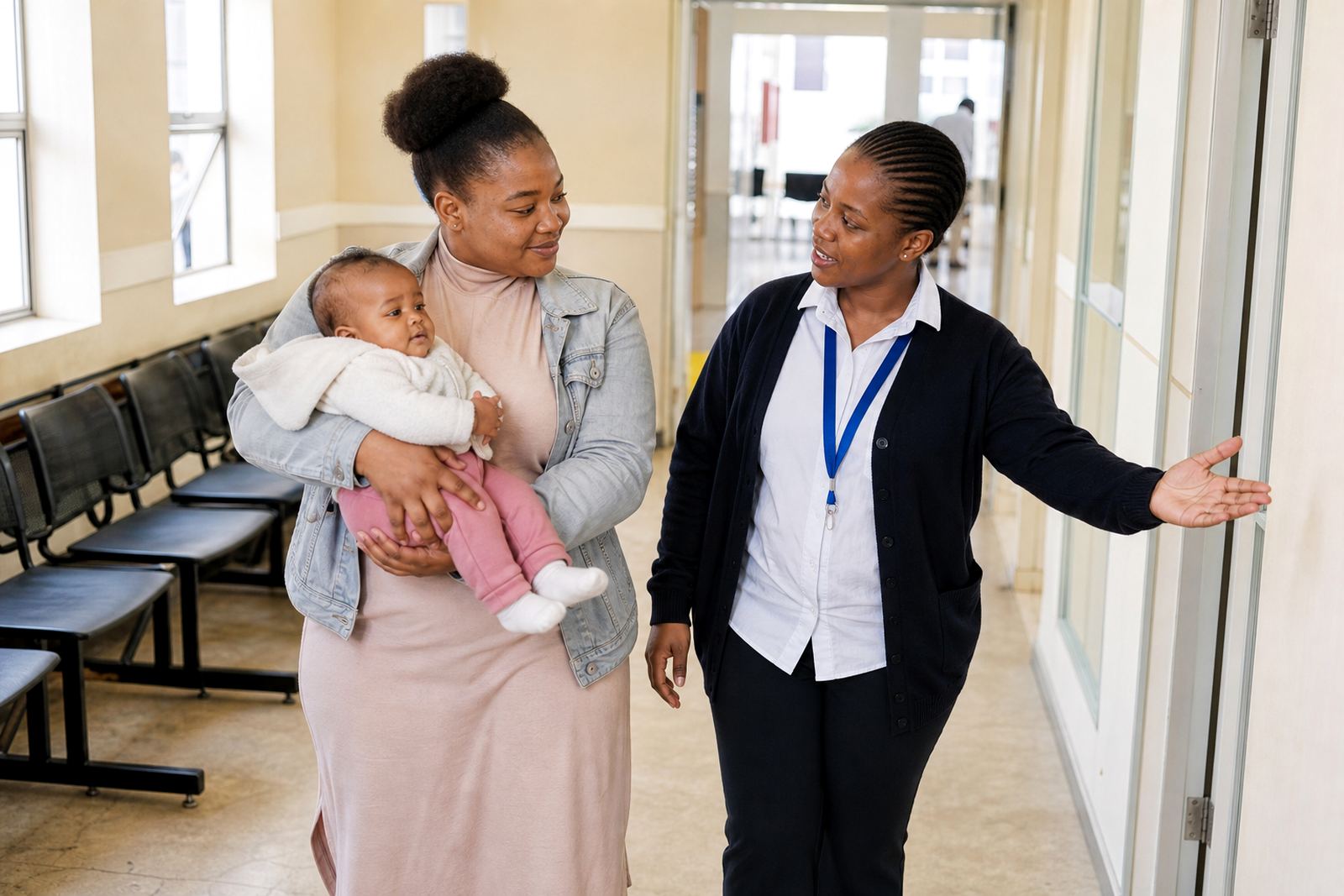
Clinic Helper is made for the point where people ask questions, sign forms and wait with parents, carers or elders. It suits a busy reception corner, a temporary outreach table, a vaccination point or a family support station where paper, pens, gloves and printed notices must stay close to hand.
The unit is supplied as a compact helper station with a working top, storage space below and a practical front layout for day to day use. It is meant for indoor clinical spaces and covered outreach setups, where staff need a tidy surface that handles repeated wiping and regular movement.
- Useful for intake, registration and patient guidance
- Works in clinics, community health points and mobile outreach stops
- Fits beside a counter, table or waiting area wall
Sizes and layout options that suit different rooms
The standard format is 900 mm wide, 450 mm deep and 1200 mm high. A compact version suits narrow rooms and corridor corners at 600 mm wide, while a wider 1200 mm option gives more room for forms, clipboards and small containers. Height can be matched to seated or standing work, depending on how the area is used.
Options usually include a plain top, a divided storage section or an open-front shelf set. Some teams ask for lockable lower storage when papers and consumables need to stay out of reach. Others prefer open access for quick handover at a fast-moving service point. The finish can be light neutral, darker neutral or a marked high-contrast edge for easier visibility.
- Widths: 600 mm, 900 mm or 1200 mm
- Top height: 900 mm or 1200 mm depending on layout
- Storage: open shelf, divided bay or lockable lower section
- Finish: wipe-clean laminate or powder coated frame
Where Clinic Helper sits best on the floor
It works well in municipal clinics, NGO outreach rooms, school health visits, pharmacy collection areas and counselling spaces where a calm handover point matters. In Braamfontein and other inner-city settings, a smaller footprint helps where waiting space is limited. In larger community facilities, the wider version gives room for files, sealed envelopes and information leaflets.
In coastal and high-humidity places like Durban, Gqeberha and parts of the Western Cape, a sealed finish and treated frame help limit damage from damp air and regular cleaning. In busy Gauteng rooms, the unit is often placed beside a wall or partition so it does not block movement between the queue and the consultation point.
- Indoor clinics with regular cleaning cycles
- Outreach points under shade or covered walkways
- Family support stations near triage or registration
Fitting and placement without fuss
Clinic Helper is usually delivered in sections for assembly on site, then fixed or positioned according to the room layout. If a wall-mounted shelf rail is added, it should be anchored into sound masonry or proper stud work, with fixings matched to the wall type. Freestanding versions need a level floor and enough clearance for people to move around both sides if the room calls for that.
Where the unit sits near handwash points or cleaning sinks, allow a little breathing space so the base does not stay damp. If wheels are specified, the castors should lock fully and roll smoothly over the floor finish in the room. A fitted edge bumper can help in narrow passages where trolleys and chairs pass close by.
- Check floor level before final placement
- Match wall fixings to masonry, drywall or timber studs
- Allow space for cleaning around the base
- Use locking castors only where movement is needed
Care that keeps the unit ready for daily use
Usually, a soft cloth, gentle detergent and clean water are enough for the working surfaces. Harsh scourers can mark the finish, so they are best avoided on laminate, coated metal and acrylic panels. In clinics where hand sanitiser and surface spray are used often, the edges and handles should be checked now and then for lift or wear.
Open shelves should be cleared of dust and paper scraps, especially in rooms with a lot of foot traffic. If the unit has a lock or moving parts, a light service check helps keep doors, hinges and runners in good order. A clean helper station makes the room feel calmer and it is easier to keep the right forms in the right place.
- Wipe daily with mild cleaner and a soft cloth
- Avoid harsh pads and abrasive powders
- Check hinges, castors and locks during routine cleaning
- Keep the base dry in washdown areas
Details to confirm before placing the order
When ordering Clinic Helper, confirm the room width, the floor finish and the amount of storage needed for forms or supplies. It also helps to note whether the unit must be freestanding, wall-fixed or mobile. If there is a narrow doorway or lift access point, those measurements should be checked before the unit is made up.
Tell us if the unit will sit beside a bench, under a notice board or in a passage where people move quickly. Also confirm whether you need a plain finish, colour contrast for visibility or a lockable section for private material. For support with a clinic drive nomination or programme issue, our contact form can be used to send the details clearly.
- Room width and doorway clearance
- Freestanding, wall-fixed or mobile layout
- Storage type and lock requirement
- Finish colour and cleaning routine
Key facts
| Product type | Clinic support helper unit |
|---|---|
| Standard size | 900 mm W x 450 mm D x 1200 mm H |
| Other size options | 600 mm or 1200 mm width |
| Materials | Powder coated frame with wipe-clean panels |
| Placement | Freestanding, wall-fixed or mobile on locking castors |
| Typical use | Clinic intake, outreach support, family guidance and registration |