A small site with a bigger job than ornament
The brief came from a local community group in Gqeberha that wanted a practical garden, not a decorative patch. The space had to support vegetables, herbs, and a few hardy flowering beds so the whole area felt useful and looked cared for at the same time.
Because the site sits in a coastal city, we had salt-blown air, sandy soil and gusty weather to deal with. The ground also needed regular foot traffic without turning into a muddy strip after rain, so the layout had to be firm and easy to manage.
- Town: Gqeberha
- Project type: Community food and pride garden
- Main use: Growing, gathering and teaching
- Setting: Open outdoor site with coastal exposure
Beds, paths and edging that could take weather
We built raised growing beds with treated timber edging and compacted fill so the soil would hold shape through watering and wind. Paths were kept narrow enough to save space, but wide enough for wheelbarrows and baskets moving between plots.
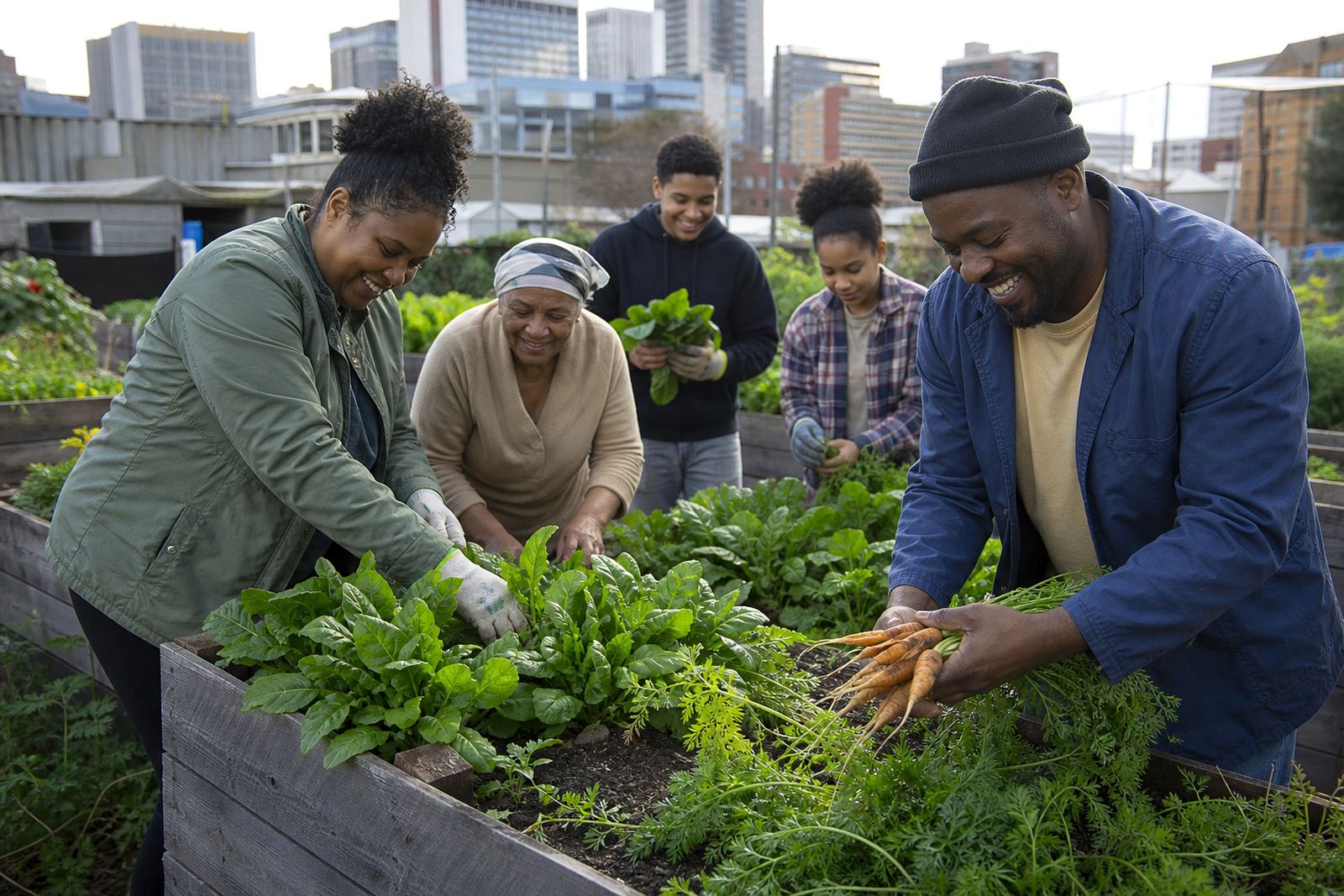
The planting plan favoured crops that could carry their weight in a community setting. Leafy greens, tomatoes, herbs and a few fruiting plants sat alongside drought-tolerant border planting to keep the site useful and tidy.
- Raised beds for better drainage and easier access
- Mulch to hold moisture through hot spells
- Gravel and compacted walkways for cleaner movement
- Hardy edging to keep loose soil in place
A build shaped by water and maintenance
Water use sat high on the list. The site needed careful irrigation planning because Gqeberha weather can shift quickly, and a garden like this has to survive dry runs without wasting water on open ground.
We kept the maintenance load realistic. That meant spacing the beds properly, using mulch to slow evaporation, and selecting plants that local volunteers could manage without specialist equipment or constant replacement.
Privacy and shared access mattered too, because the project brought together many hands and a few strong opinions. The layout left room for teaching, but it also protected planted sections from being walked through or overpicked.
- Water-wise planting choices
- Simple access points for volunteers
- Room for teaching and harvesting
- Clear edges to separate growing space from foot traffic
From first dig to the last layer of mulch
The project ran over six weeks in practical stages. The first week was clearing, marking out, and checking the ground levels. The middle weeks went into bed building, soil preparation and path work, then the final stretch covered planting, mulching and site tidy-up.
There were a few pauses for weather and material checks, which is normal on a coastal site. It was better to set the beds straight and let the soil settle than rush and leave the garden uneven after the first heavy watering.
- Week 1: Clear and mark the site
- Weeks 2 to 3: Build beds and paths
- Weeks 4 to 5: Soil, planting and irrigation placement
- Week 6: Mulch, finish and handover
What the garden changed for the group
The result was a working garden that could support food-growing and still feel welcoming from the street edge. The site looked more cared for, and the people using it had a clearer system for planting, watering and harvesting without confusion.
It also gave the community something practical to point to. Fresh produce, a better presented plot and a sense of shared effort can do more than decorate a corner, especially where nutrition and local pride meet in the same place.
- More usable growing space
- Cleaner circulation through the site
- A tidier public face for the area
- Better conditions for small-scale food production
If the same brief landed again
We would keep the structure plain and the maintenance plan simple. A garden meant for community use works best when it is easy to water, easy to harvest and hard to damage by accident.
On a similar job, we would keep the bed sizes manageable, repeat the water-wise planting mix, and protect the paths from becoming soft after rain. That balance matters in Gqeberha, where sea air and wind can change the look of a site fast if the finish is too delicate.
- Use raised beds from the start
- Keep the planting mix hardy and local-friendly
- Plan for easy watering and cleaner access
- Leave enough room for volunteers to work without crowding
Key facts
| Project town | Gqeberha |
|---|---|
| Project type | Community garden for nutrition and pride |
| Timeline | 6 weeks |
| Main structure | Raised planting beds with compacted paths |
| Planting focus | Vegetables, herbs and hardy border planting |
| Site conditions | Coastal wind, sandy soil and water planning |
| Pull quote | A garden earns its keep when it feeds people and still feels cared for. |