A local brief with a human centre
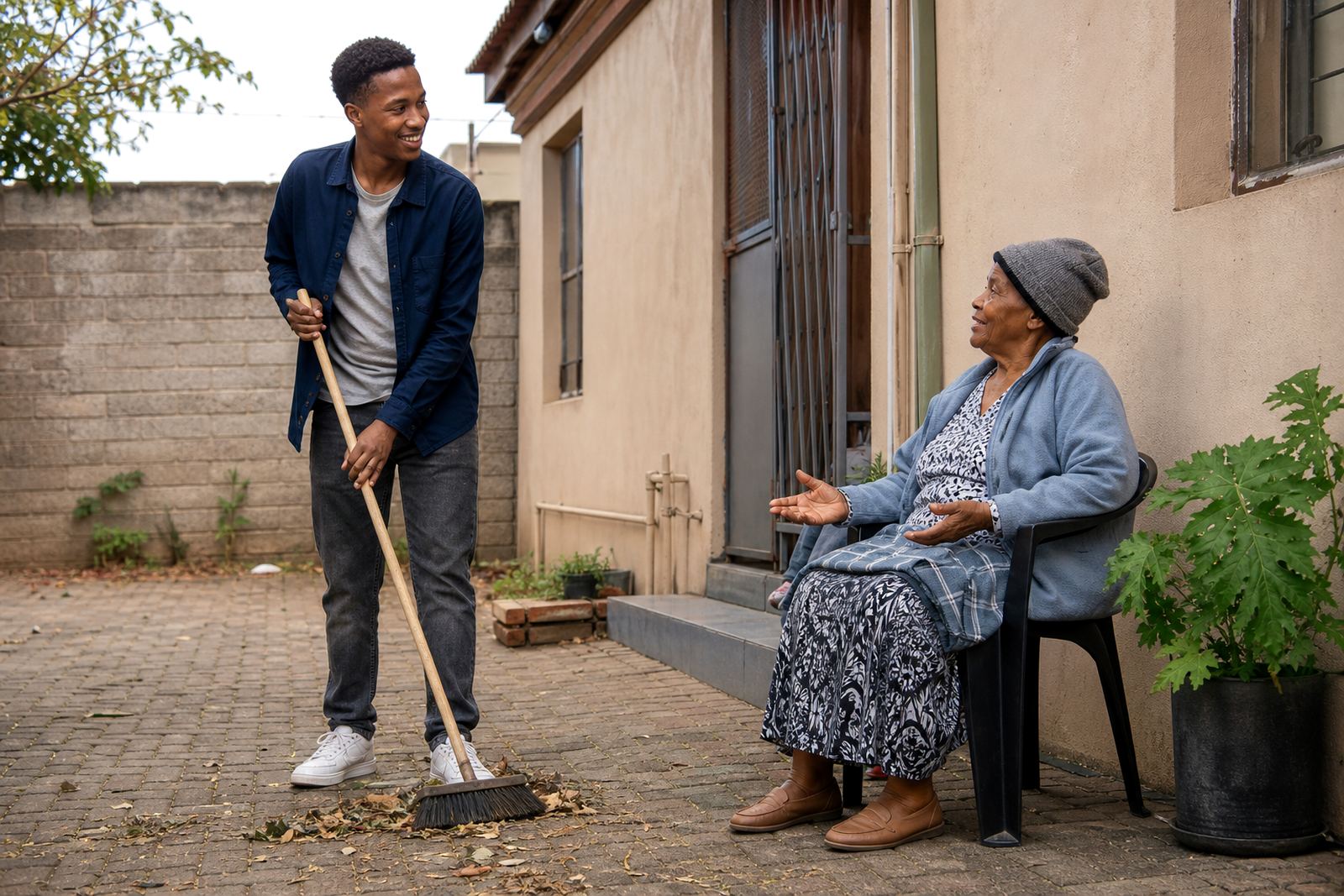
The client needed a project story that felt close to the street-level reality in Seshego, not a polished civic slogan. The angle focused on older residents who are checked on, helped with shopping, given lifts to clinics, or sat with during long afternoons when isolation bites hardest.
We framed the project for a nomination-based awards programme in plain language. The writing had to invite public participation while keeping dignity intact, because many strong nominations involve family strain, health worries, or a neighbour stepping in quietly for years.
- Client type: community-facing awards programme
- Town focus: Seshego, Limpopo
- Project type: nomination story and process copy
- Main theme: companionship plus practical support
What the nomination needed to say
The brief asked for a page that explained how people could nominate someone without making the process feel heavy. We laid out the essentials: who the nominee is, what help they give, how often they step in, and a short account of why the support matters in real life.
Strong nominations were described in practical terms. A good entry names the person, gives a few clear examples, and shows the change that support makes for the older resident, whether that is safer errands, less loneliness, or better access to everyday tasks.
- Tell the story in ordinary language
- Include one or two specific examples
- Show the effect on the older person
- Leave out rumours and big claims
Boundaries around consent and privacy
Privacy sat at the centre of the work. We wrote guidance that made consent a required step when the nominee is identifiable, especially when the story mentions health, family difficulty, income pressure, or living arrangements that should stay private.
The copy also explained that sensitive information should only be shared when it helps the nomination and when the person involved understands what is being submitted. That kept the page practical for community members who want to recognise good work without exposing too much.
- Get consent before naming a nominee where possible
- Keep health and home details to what is needed
- Do not upload material that puts someone at risk
- Use the privacy notes before submitting forms
How the pages were put together
We supplied clear sections for how to nominate, eligibility checks, writing the story, useful evidence, nominee consent, privacy explained, judging criteria, review process, public questions, updating a nomination, and after you submit. The work was shaped so a person in Braamfontein or Seshego could read it without needing specialist wording.
Evidence guidance stayed modest. A short note from a neighbour, a photo from a community setting, or a description of regular support can help, but the story still matters more than decoration. We kept the language steady and practical, because this kind of programme has to feel fair to people across South Africa.
- Five weeks from first brief to final sign-off
- Drafting focused on public participation
- Review language covered fairness and privacy
- Final copy stayed neutral and easy to scan
Judging notes written in plain terms
The judging section was written so people could understand what gets considered without guessing at hidden rules. The copy points to clarity, community value, consistency, and the strength of the nomination story, rather than drama or personal popularity.
We also set out that a nomination should be judged on what can be shown in the submission, not on noise around the person. That helps keep the process grounded when the nominee is a quiet carer, a teacher who stays late, or a neighbour who has helped for years without asking for attention.
- Clear story over loud claims
- Community benefit over personal praise
- Evidence that fits the story
- Respect for the nominee and the people around them
What the project achieved for the programme
The result was a cleaner public path into the nominations process. People could understand what belongs in a nomination, what should stay private, and how to submit material without feeling lost in formal language. That matters for a public awards programme drawing nominations from Johannesburg, Cape Town, Durban, Gqeberha, Polokwane and smaller towns as well.
If we were handling a similar project again, we would keep the same balance: warm enough to invite participation, firm enough to protect people, and simple enough for a first-time nominator to follow without help.
- Public-facing language stayed easy to read
- Consent and privacy were made visible early
- The story angle kept the focus on care and companionship
- The nomination journey felt less intimidating
Key facts
| Project | Seshego Elder Friend |
|---|---|
| Client type | Community awards programme |
| Town focus | Seshego, Limpopo |
| Base | Braamfontein, Johannesburg |
| Timeline | 5 weeks |
| Core themes | Companionship, practical support, privacy, consent |