A Yeoville brief built around the last walk home
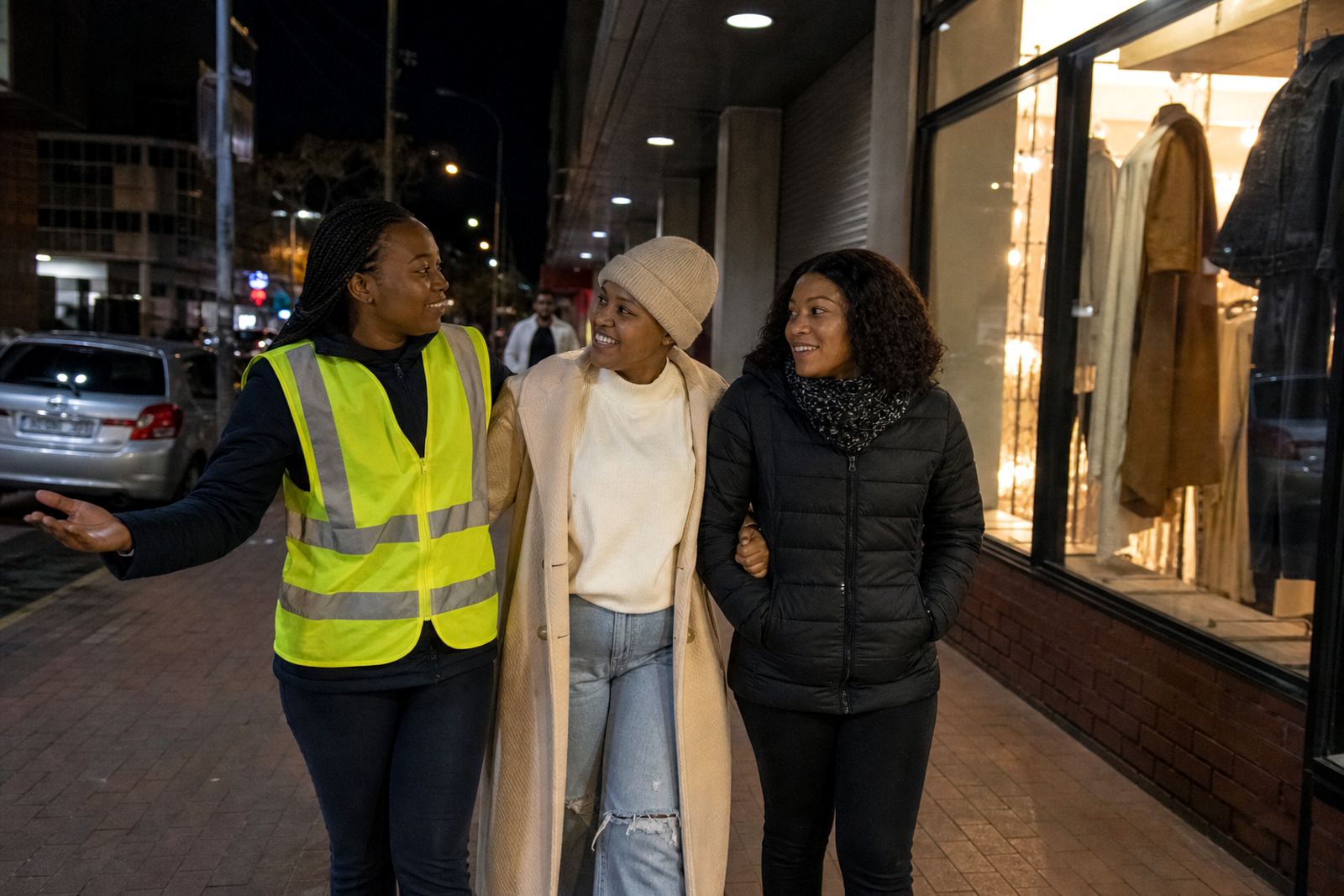
The brief came from a community-minded client in Johannesburg who wanted a nomination story that would feel real to local people and still work for a national awards process. Yeoville Night Walker had to speak about vulnerable residents getting home safely after dark, without turning the people involved into a slogan or a sad anecdote.
The project had to stay plain, because the most important part was the action itself. A neighbour walking with someone, waiting at a gate, checking a route or stepping in when a street feels unsafe can be meaningful without being dressed up. We framed the story around that kind of everyday care, with enough detail for reviewers to understand what happened and why it mattered.
- Client type: community-focused nomination brief
- Town: Johannesburg, with Yeoville as the local anchor
- Project angle: helping vulnerable residents get home safely after dark
- Audience: public nominators and review teams
What had to stay inside the lines
The work needed to respect several limits. We could not invent winners, judges, event details or prizes, and we could not turn a nomination into a campaign promise. The text had to make space for public input from across South Africa while still keeping the example rooted in a real neighbourhood situation.
There was also a privacy boundary. A strong nomination can name the effort without exposing a person who may already be exposed by their circumstances. We kept the writing careful around locations, routines and any detail that could place someone at risk after dark. That meant using enough context to show the value of the action, but not enough to identify vulnerable people unnecessarily.
- No made-up awards claims
- No private details that could create risk
- No dramatic language around fear or rescue
- No date, venue or prize language
Shaping the nomination so the facts carry the story
The nomination structure was built to help a member of the public tell the story without getting stuck. We mapped the flow from who stepped in, to what they did, to who benefited, and then to the wider community effect. That kind of sequence makes it easier to write a nomination that feels grounded rather than vague.
We also supplied wording for the parts that often get skipped. People can describe kindness well enough, but they sometimes leave out the useful bits: where the help happened, what changed, whether the nominee acted alone or with others, and how long the help had been going on. Those details matter because judging is easier when the story is specific.
- How to nominate guidance
- Eligibility checks in plain language
- Writing the story prompt
- Useful evidence prompts without overclaiming
- Updating a nomination after submission
The timeline ran over three weeks of drafting and refinement. The first week was spent on the story shape and rules, the second on consent and privacy wording, and the third on polishing the public-facing text so it sounded steady, local and usable.
Consent and privacy had to sit near the front
Consent was treated as a core step, not a line buried at the end. If a nominee is going to be named in an awards process, the person or their guardian where relevant needs to know what is being shared and why. That was especially important here because the project dealt with people who may already be visible in their communities.
We also set out privacy language that explains what should stay out of a nomination. Phone numbers, home addresses, medical detail and anything else that is not needed for judging were kept outside the main flow. If a story involved a vulnerable resident, the submission path needed to make that clear without encouraging oversharing.
- Nominee consent before public mention
- Privacy wording for sensitive entries
- Clear guidance on useful evidence
- Plain instructions for public questions
How judging was described without turning cold
The judging criteria had to feel fair and readable, not technical for its own sake. We described the process in terms that regular submitters can understand: does the nomination explain real help, is the action specific, does the story show community value, and is the evidence consistent with the account. That gives people a better sense of what belongs in a strong entry.
The review process was written to support human judgement. A good nomination is not only about emotion, it is about whether the facts hold together. For Yeoville Night Walker, that meant showing practical care after dark in a way that could stand up to review from different parts of the country, including nominations from Gauteng, the Western Cape, KwaZulu-Natal, the Eastern Cape, Limpopo, the Free State, North West and Mpumalanga.
- Real action rather than vague praise
- Clear link between nominee and outcome
- Evidence that fits the story
- Language suitable for public review
What the project left in place for future nominations
The outcome was a nomination framework that could handle a sensitive neighbourhood story without losing its warmth. Yeoville Night Walker now sits as a useful example of how to write about community care in a way that is clear, respectful and easy to review. The public-facing pages can also hold future nominations for carers, teachers, volunteers, first responders and neighbours who step in when it matters.
If we were to shape a similar project again, we would keep three things close at hand: a simple nomination path, consent wording that is hard to miss, and privacy notes that protect people before they are shown to a wider audience. That mix keeps the process practical for a public awards programme based in Braamfontein, Johannesburg and open to nominations from across South Africa.
- Stronger public guidance for nomination writing
- Less confusion around consent and privacy
- Clearer judging language for community stories
- Room for local detail without overexposing people
Key facts
| Project | Yeoville Night Walker |
|---|---|
| Client type | Community-focused nomination brief in Johannesburg |
| Base | Braamfontein, Johannesburg |
| Timeline | 3 weeks |
| Scope | Nomination writing, consent wording, privacy guidance, judging language |
| Region | Public nominations across South Africa |